
Destigmatizing Mental Health: Why Open Conversations Matter
- by The TCNY Care Team
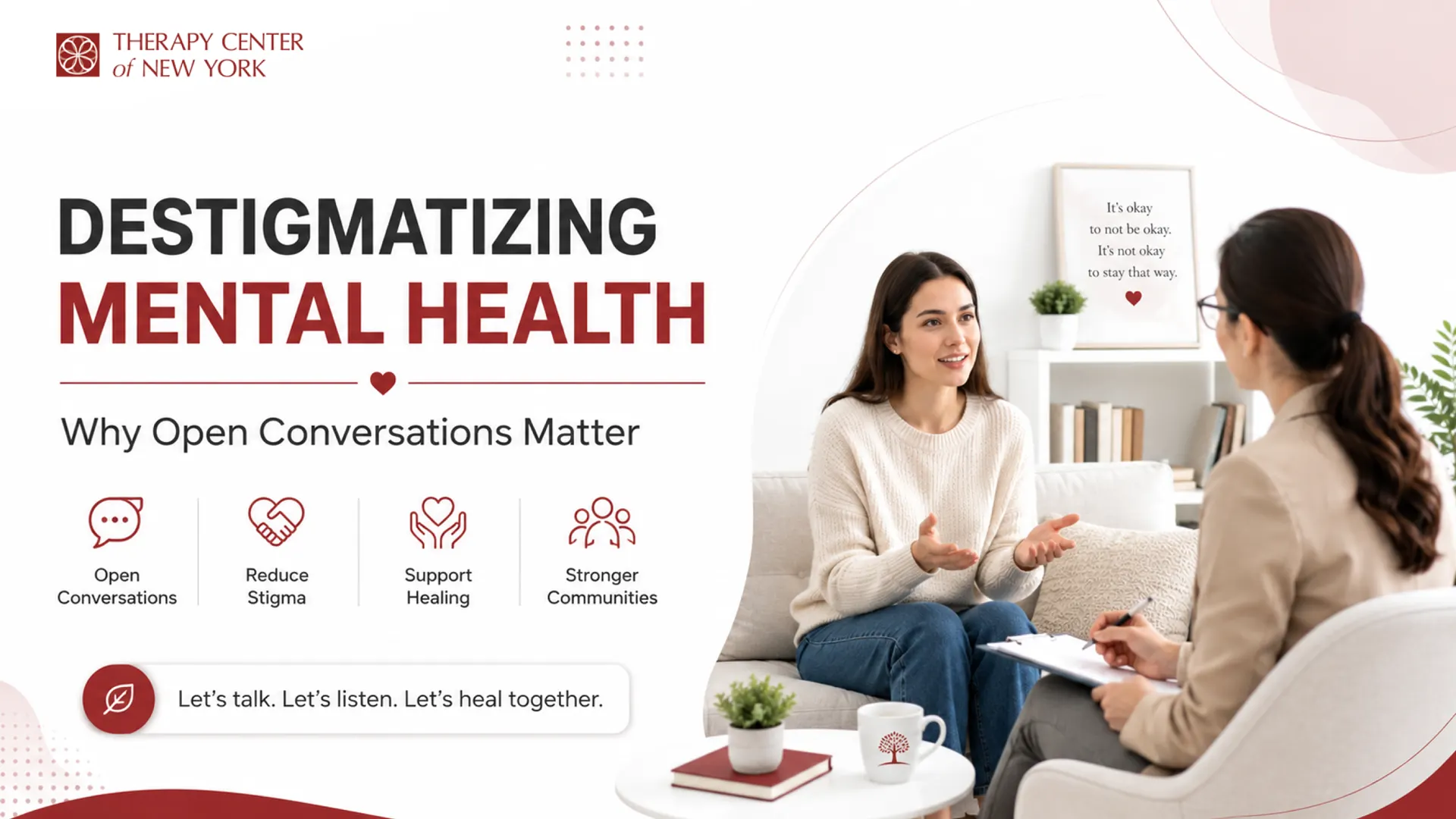
Destigmatizing mental health is essential to creating a society where individuals feel safe and supported when discussing their emotional and psychological well-being. Behavioral health stigma creates barriers that often prevent people from seeking the help they need. By encouraging open conversations about mental health, we can increase mental health awareness, reduce misconceptions, and improve access to therapy and counseling services, including options like online therapy in New York.
Explain what behavioral health stigma means
Behavioral health stigma involves negative attitudes and beliefs that society or individuals hold toward emotional and psychological challenges. This stigma can manifest as judgment, shame, and discrimination against those experiencing issues like anxiety and depression. Stigma makes discussing behavioral health concerns difficult and discourages people from seeking mental health support.
Why people may hesitate to discuss emotional or psychological concerns
Many hesitate to talk about their emotional or psychological concerns because of fear of being misunderstood, judged, or labeled. Some worry they will be seen as weak or that seeking support means they have failed in some way. These concerns can cause isolation and delay access to important behavioral health support.
How respectful conversations can make seeking support feel more acceptable
Respectful and open conversations help create an environment where behavioral health concerns are normalized rather than stigmatized. When people feel listened to without judgment, they are more likely to share their experiences and consider seeking therapy or counseling. Such dialogue promotes acceptance and encourages others to reach out for help when needed.
What Does Mental Health Stigma Mean?
Mental health stigma refers to the harmful stereotypes and misunderstandings about behavioral health conditions. Such stigma often leads to marginalization of those affected, which can affect their emotional well-being and willingness to seek support. Understanding and addressing stigma is crucial for improving behavioral health outcomes.
Understanding Stigma and Misconceptions
Stigma is based on misconceptions that paint behavioral health challenges negatively or inaccurately. Common myths include beliefs that people can simply “snap out of it” or that seeking therapy is a sign of weakness. These misunderstandings create barriers that prevent people from receiving effective care and emotional support.
How Stigma Can Affect Everyday Life
Stigma can cause people to feel shame, isolation, and discouragement. It may affect personal relationships, work life, and overall emotional well-being. This can worsen symptoms of conditions such as anxiety and depression and create a cycle that is hard to break.
Why Stigma Can Prevent People From Seeking Support
Fear of judgment or discrimination often keeps people from talking about their struggles or seeking therapy and counseling. Stigma can lead to delaying or avoiding behavioral health treatments, which may increase stress and emotional challenges over time.
Why Open Conversations About Mental Health Matter
They Make Behavioral Health Concerns Easier to Discuss
Open conversations help normalize behavioral health topics. When people hear others share their experiences, they feel safer opening up about their own emotional well-being.
They Help Reduce Shame and Isolation
Talking about behavioral health reduces feelings of shame and loneliness by creating understanding and compassion within families, workplaces, and communities.
They Encourage People to Seek Support
When discussions emphasize the importance of therapy and counseling—such as therapy in New York or online therapy in New York—individuals may feel more comfortable reaching out for help.
They Improve Understanding and Education
Sharing accurate information challenges mental health misconceptions and spreads mental health education, helping others recognize the signs of behavioral health concerns like anxiety and depression.
They Create More Supportive Relationships
Open dialogue strengthens relationships by fostering empathy and trust, enabling families and friends to better support those experiencing emotional difficulties.
Common Misconceptions About Mental Health
How to Start an Open Conversation
Choose a Comfortable Setting
• Find a private and quiet time where the person feels safe
• Avoid starting serious conversations when someone is rushed or distracted
Listen Without Judging
• Allow the person space to express themselves freely
• Resist the urge to offer solutions immediately
• Take their concerns seriously and validate their feelings
Use Supportive Language
• Ask open-ended questions to encourage sharing
• Avoid labels, blame, or dismissive remarks
• Respect personal boundaries and do not force topics
Know When to Encourage Professional Support
• Recognize when emotional concerns persist or interfere with daily functioning
• Gently suggest seeking behavioral health support from qualified providers
• Emphasize that therapy and counseling are confidential and personalized
How Families and Friends Can Help Reduce Stigma
• Listen with patience and without judgment
• Educate themselves about behavioral health to better understand challenges
• Respect privacy and confidentiality
• Encourage seeking professional support when appropriate
• Maintain ongoing support by regularly checking in
The Role of Therapy in Breaking Down Stigma
Therapy Can Provide a Safe Place to Talk
Therapy offers a confidential and supportive environment where individuals can discuss their concerns without fear of stigma.
Professional Support Can Help People Understand Their Concerns
Care providers can help clarify misconceptions, identify underlying issues, and develop effective coping strategies.
Treatment Can Be Personalized to Individual Needs
Therapy Center of New York’s care providers deliver behavioral health treatment tailored to individuals experiencing anxiety, depression, stress, and other emotional challenges. Both in-person and online therapy in New York are available to suit personal preferences and needs.
How Social Media and Public Conversations Can Influence Stigma
Social media and public discussions can shape perceptions about behavioral health. Responsible, accurate conversations can increase mental health awareness and reduce stigma. However, oversimplifying or spreading misinformation can inadvertently perpetuate mental health misconceptions. Reliable information is key to promoting understanding and supporting those seeking help.
When Should You Consider Professional Support?
• Emotional concerns persist over time without improvement
• Anxiety or stress begins to interfere with daily activities or relationships
• Work or school performance is affected
• You feel overwhelmed, isolated, or hopeless
• Self-help strategies have not provided sufficient relief
How to Support Your Own Emotional Well-Being
• Build healthy daily routines including regular rest and physical activity
• Maintain supportive relationships with trusted people
• Set and respect healthy personal boundaries
• Reduce excessive time spent on digital devices and social media
• Practice stress-management techniques such as mindfulness or breathing exercises
• Consider reaching out to behavioral health professionals when needed
Simple Conversation Starters
• "How have you been feeling lately?"
• "Do you want to talk about what's been bothering you?"
• "I'm here to listen."
• "Would it help to speak with a professional?"
• "What kind of support would feel helpful right now?"
Can Online Therapy Make Seeking Support Easier?
How Online Therapy Works
Online therapy uses video calls, phone calls, or messaging platforms to connect individuals to licensed behavioral health providers. This option offers convenience, privacy, and access to care from home or anywhere.
When Virtual Therapy May Be Helpful
Online therapy may be especially useful for people with busy schedules, mobility challenges, or those who prefer remote support. Therapy Center of New York offers online therapy appointments in New York when appropriate for the individual's needs.
FAQ
Why is reducing mental health stigma important?
Reducing stigma helps people feel safe discussing their behavioral health and seeking support. It leads to better emotional well-being and improves access to therapy and counseling.
How can I talk to someone about their behavioral health?
Choose a private setting, listen without judgment, use supportive language, and encourage professional support when needed, ensuring the conversation is respectful and compassionate.
What should I avoid saying when someone shares a personal concern?
Avoid dismissive comments, labels, or telling them to “just get over it.” Instead, validate their feelings and encourage open discussion.
Does talking about mental health encourage people to seek therapy?
Yes. Open conversations reduce shame and make it easier for people to consider therapy and counseling as helpful resources.
When should someone consider professional support?
When emotional difficulties interfere with daily life, last for a long time, or self-help strategies don't work, professional behavioral health support should be considered.
Can therapy help with anxiety, depression, and stress?
Yes. Therapy Center of New York’s care providers offer personalized treatment that can effectively address anxiety, depression, stress, and other emotional challenges.