
Tauma and Crisis Support: How Social Workers Can Help
- by The TCNY Care Team
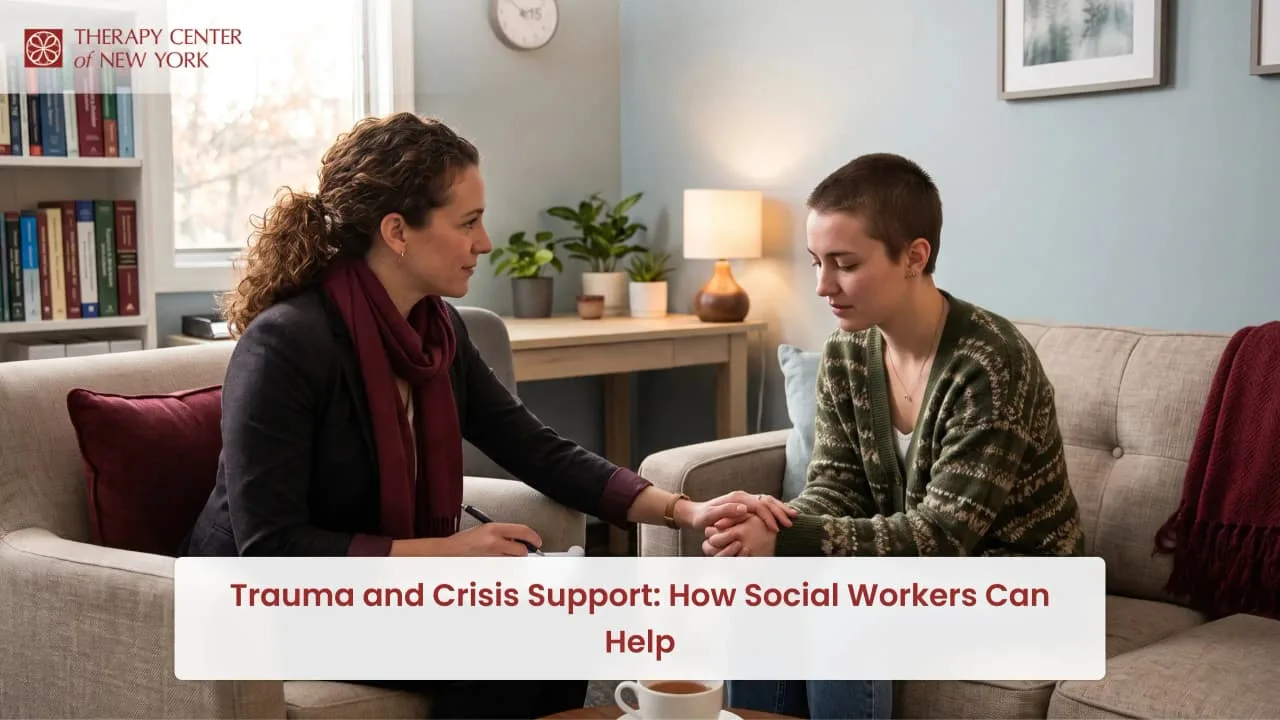
Trauma and crisis events can deeply affect many parts of a person’s life, including their emotions, behavior, relationships, work, sleep, and everyday functioning. Everyone responds
differently to traumatic experiences or stressful situations. While some people may recover quickly, others might struggle with lasting emotional and practical challenges.
Social workers are trained professionals who provide crucial emotional support, assessment, counseling, advocacy, referrals, and connection to resources tailored to individual needs. Their role varies depending on their education and the setting in which they work.
At Therapy Center of New York, care providers offer behavioral health treatment customized to each person’s unique needs, ensuring comprehensive trauma and crisis support.
What Is Trauma and Crisis Support?
Trauma support involves helping individuals process and recover from distressing events that affect their mental and emotional health. These can include abuse, accidents, loss, or other significant hardships.
Crisis support focuses on immediate or ongoing situations where someone faces overwhelming emotional distress or danger. This might involve sudden loss, violence, or other urgent events requiring quick intervention.
While trauma support often focuses on understanding and healing from past experiences, crisis support prioritizes managing urgent needs and stabilizing the individual in the moment.
Professional trauma and crisis support help people better understand their reactions, offering a path toward recovery and safety.
Central to effective care is trauma-informed care, which means recognizing the widespread impact of trauma and responding in ways that promote safety, trust, and empowerment.
What Situations May Require Support?
-
Sudden loss or bereavement
-
Abuse or violence
-
Accidents or injuries
-
Natural disasters
-
Relationship breakdown
-
Major life transitions
-
Housing or financial instability
-
Family conflict
-
Work-related crises
-
Serious illness affecting an individual or family
-
Other events causing significant emotional distress
What Role Can Social Workers Play in Trauma and Crisis Support?
Social workers bring a diverse set of skills to trauma and crisis support. Their roles vary depending on factors such as their education, licensure, specialization, and work environment. They can work in hospitals, community programs, schools, behavioral health clinics, or private practices.
Providing Emotional Support
-
Create a supportive, safe environment for people to express themselves
-
Listen with empathy and without judgment
-
Help individuals identify their immediate concerns and feelings
-
Offer strategies to cope emotionally in difficult moments
Assessing Needs and Risks
-
Understand the person’s circumstances in depth
-
Identify behavioral health concerns such as anxiety or depression
-
Assess immediate safety needs and risks within their professional scope
-
Determine if additional services or referrals are needed
Crisis Intervention
-
Assist individuals in managing overwhelming emotional distress
-
Focus on stabilizing the situation and planning practical next steps
-
Connect people to appropriate community resources and supports
-
Help identify and mobilize available support systems
Connecting People With Community Resources
Social workers often serve as a vital link connecting individuals to necessary supports, including:
-
Behavioral health services
-
Medical care
-
Housing assistance
-
Community organizations
-
Financial or social services
-
Support groups
-
Crisis resources
How Social Workers Help People After Trauma
After a traumatic event, social workers provide ongoing support in various ways to aid trauma recovery and emotional healing.
Helping People Understand Trauma Responses
Individuals may experience a wide range of reactions, such as fear, sadness, anger, difficulty sleeping, or feeling overwhelmed. Social workers help people recognize these responses as natural reactions and guide them toward understanding and managing these feelings.
Developing Healthy Coping Strategies
-
Grounding techniques to stay connected to the present moment
-
Stress management strategies
-
Emotional regulation skills
-
Encouragement of healthy daily routines
-
Facilitating social support systems
Addressing Practical Challenges
Trauma can disrupt many parts of daily life, including housing, employment, family relationships, and healthcare. Social workers assist by helping individuals navigate these challenges, working toward stability and resilience.
Supporting Long-Term Recovery
-
Establishing clear treatment goals
-
Identifying ongoing behavioral health or psychiatric needs
-
Connecting clients with trauma therapy or psychiatric services
-
Monitoring progress and adjusting care as necessary
Trauma-Informed Care: Why It Matters
Trauma-informed care is a crucial framework for anyone providing trauma and crisis support. Its guiding principles include:
-
Safety: Ensuring physical and emotional safety
-
Trust: Building transparent and reliable relationships
-
Collaboration: Working together with clients and other professionals
-
Choice: Offering options and respecting autonomy
-
Empowerment: Supporting personal strengths and control
-
Respect: Valuing individual experiences and cultural backgrounds
Professionals should avoid actions or language that could make someone feel powerless or increase distress. Trauma-informed care fosters healing and resilience in a compassionate environment.
When Should You Consider Talking With a Social Worker?
Seeking professional support from social workers can be beneficial when:
-
Emotional distress feels overwhelming or hard to manage
-
A traumatic event continues to impact daily functioning
-
Relationship or work responsibilities are becoming difficult
-
Major life changes feel unmanageable
-
You need help accessing behavioral health or community resources
-
Symptoms related to stress or trauma persist or worsen over time
-
You are uncertain about the kind of support you require
It is important to know that you do not have to wait until a crisis escalates to seek help. Early support can aid recovery and prevent worsening symptoms.
Social Worker vs. Therapist: What's the Difference?
Important: Licensed clinical social workers (LCSWs) can provide psychotherapy where permitted by their license and jurisdiction. Professional roles and scopes of practice vary widely.
Social Workers and Crisis Intervention
Crisis intervention by social workers may include:
-
Understanding the unfolding crisis and what is happening
-
Identifying immediate concerns and risks
-
Establishing safety and stabilization
-
Helping reduce emotional distress
-
Identifying available support systems
-
Connecting individuals to appropriate services and resources
-
Developing practical next steps to address the crisis
It is important to understand that crisis intervention is typically short-term and focused on immediate stabilization, whereas trauma therapy often involves long-term treatment to address underlying trauma symptoms.
Can Social Workers Help With Trauma-Related Behavioral Health Concerns?
After trauma, individuals may experience a variety of behavioral health concerns, such as:
-
Anxiety
-
Depression
-
Stress
-
Sleep difficulties
-
Relationship challenges
-
Emotional dysregulation
-
Avoidance behaviors
-
PTSD-related symptoms
While social workers may not diagnose or treat all these conditions directly, their role includes identifying concerns, providing support, and referring clients to appropriate therapy or psychiatric care depending on their credentials, setting, and scope of practice.
Online Trauma and Crisis Support in New York
Many behavioral health services, including trauma and crisis counseling, can be provided through online therapy in New York when clinically appropriate. Telehealth offers convenience, flexibility, and continuity of care for individuals who may face barriers to in-person visits.
However, online care may not be suitable for every crisis or situation, especially when immediate, hands-on intervention is needed.
Individuals experiencing a medical emergency or an immediate risk of harm should seek urgent in-person help or call emergency resources rather than waiting for a scheduled telehealth appointment.
How to Find the Right Social Worker for Trauma Support
Check Credentials and Experience
-
Verify appropriate state licensure
-
Look for experience working with trauma-related concerns
-
Confirm training or experience in crisis intervention when relevant
-
Seek trauma-informed care training or practice
Ask About Their Approach
-
Do you work with trauma-related concerns?
-
What types of situations do you commonly support?
-
How do you approach crisis situations?
-
Do you coordinate care with other professionals?
-
Do you provide online appointments?
Consider the Therapeutic Fit
-
Communication style and openness
-
Comfort and trust during interactions
-
Treatment goals alignment
-
Appointment format and availability
-
Cultural sensitivity and personal preferences
What to Expect From Your First Appointment
Your initial session with a social worker for trauma support typically includes:
-
A conversation about what brought you to treatment
-
Discussion of current concerns and symptoms
-
Review of relevant personal and behavioral health history
-
Assessment of any immediate needs and safety concerns
-
Setting initial treatment goals together
-
Exploring available support options
-
Referrals or coordination with other professionals when appropriate
You do not need to have everything figured out before your first appointment. The social worker will guide you through the process at your pace.
When a Crisis Requires Immediate Help
Safety is the top priority. If you or someone you know is in immediate danger, experiencing a medical emergency, or at risk of harming themselves or others, call emergency services right away.
For New York residents, dial 911 for emergencies or 988 for the Suicide & Crisis Lifeline. These resources provide immediate support and intervention beyond routine behavioral health or trauma therapy appointments.
Frequently Asked Questions (FAQ)
-
Can social workers help with trauma?
Appropriately trained and licensed social workers may provide trauma-related counseling, emotional support, assessment, referrals, and care coordination depending on their role, qualifications, and scope of practice.
-
What does a social worker do during a crisis?
During a crisis, social workers may assess immediate needs and safety, provide emotional support, help stabilize the situation, coordinate access to resources, and refer individuals to appropriate services when necessary.
-
Can a social worker provide therapy?
Licensed clinical social workers can provide psychotherapy where permitted by their license, qualifications, and jurisdiction. They may help individuals address emotional difficulties, cope with stress, and work through traumatic experiences.
-
What is trauma-informed care?
Trauma-informed care is an approach to support and treatment that recognizes the effects of trauma and seeks to avoid retraumatization. It emphasizes safety, trust, collaboration, choice, and empowerment while respecting each person's experiences, needs, and preferences.
-
Can trauma support be provided online?
Yes, some trauma-related behavioral health services can be delivered online through telehealth when clinically appropriate. These services may include counseling, emotional support, and follow-up care, depending on the provider's qualifications and applicable regulations.
-
When should I seek professional support after trauma?
Consider seeking professional support when distress persists, interferes with daily activities, affects relationships or sleep, or becomes difficult to manage independently. A qualified mental health professional can help assess your needs and recommend appropriate support and treatment options.