
Why Facebook Can Be Addictive and How to Build Healthier Habits
- by The TCNY Care Team
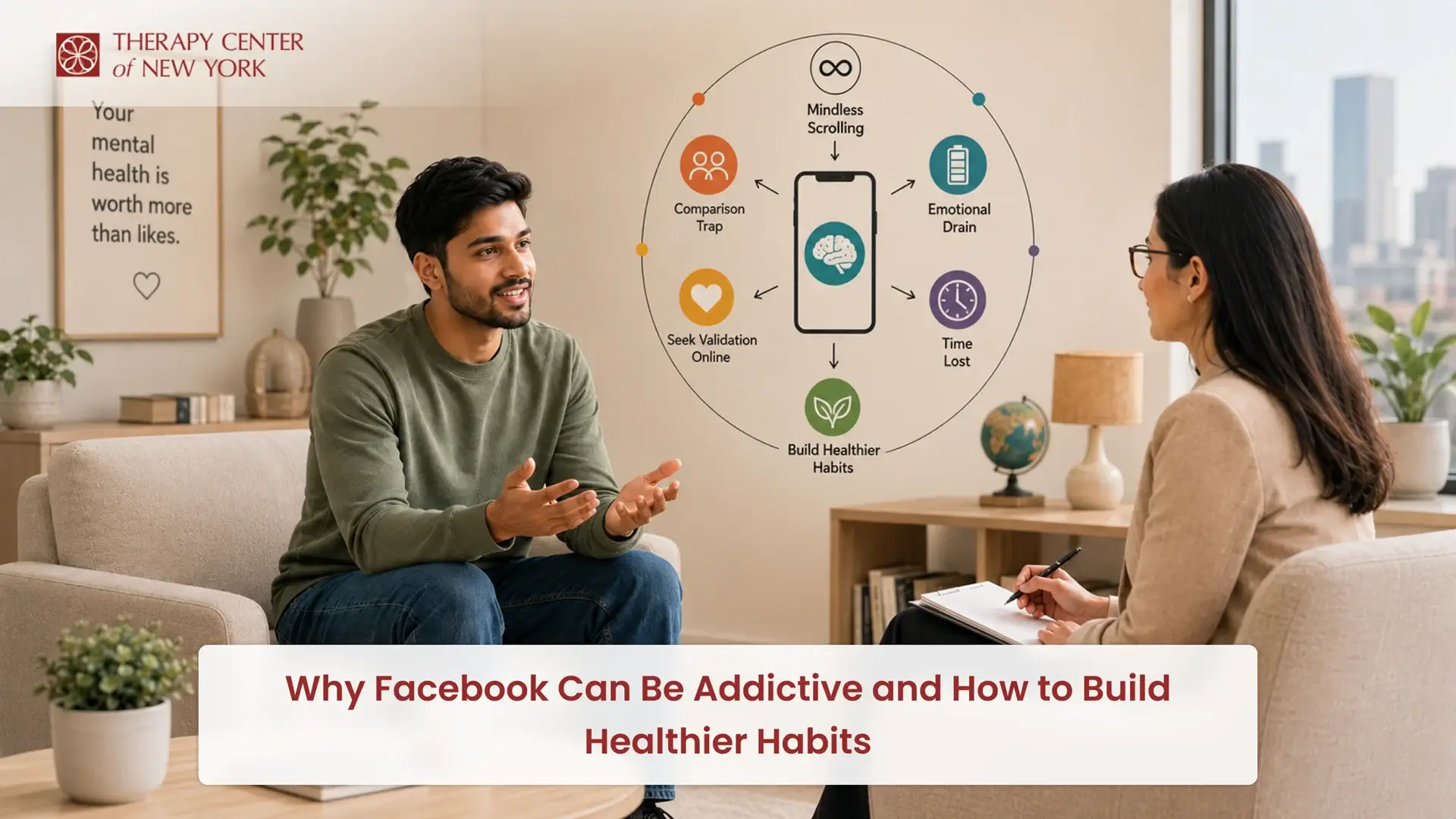
Facebook is a popular social media platform used by millions, but for some people, it can become difficult to control. Repeatedly checking Facebook often turns into a daily routine that feels automatic or even compulsive. However, frequent use of Facebook does not always mean someone has a Facebook addiction. Understanding digital habits and how they affect daily functioning is important in recognizing when social media use crosses a line.
Why Is Facebook So Engaging?
Notifications and Social Feedback
Facebook uses notifications, comments, reactions, and messages to keep users engaged. These social feedback mechanisms encourage people to return often to see who responded or interacted with their posts. The anticipation of social interaction can make it tough to ignore the platform.
Endless Scrolling
The ability to scroll continuously without reaching an end on Facebook provides an endless stream of content. This feature makes it easy to spend more time online than initially intended, often without realizing how much time has passed.
Personalized Content
Facebook’s algorithms tailor content based on your previous activity and interests. This personalized feed increases the chance of seeing content that feels relevant or entertaining, which encourages longer and more frequent visits.
Fear of Missing Out
The fear of missing news, conversations, events, or updates drives many to check Facebook regularly. This “Fear of Missing Out” or FOMO can create anxiety and foster compulsive checking to stay connected and informed.
Habit and Automatic Behavior
Over time, checking Facebook during specific times of day or moments of boredom becomes automatic. This pattern forms a habit loop that can be challenging to break once established.
What Is Facebook Addiction?
Understanding Problematic Social Media Use
The term "Facebook addiction" describes problematic or compulsive social media use but is not an official diagnosis. Instead, it highlights when social media behaviors interfere with daily life and well-being.
When Facebook Use Becomes Concerning
The problem is less about how many hours someone spends on Facebook and more about whether the use is difficult to control or begins to disrupt responsibilities, relationships, or emotional health.
Signs of Problematic Facebook Use
• Checking Facebook repeatedly without planning to
• Spending more time on Facebook than intended
• Difficulty stopping or reducing usage despite efforts
• Neglecting responsibilities at work, home, or school
• Checking Facebook during work or important conversations
• Feeling restless or anxious when unable to check the platform
• Using Facebook to escape from uncomfortable emotions
• Losing sleep due to late-night scrolling
• Continuing use despite facing negative consequences
How Excessive Facebook Use Can Affect Daily Wellbeing
Sleep
Late-night scrolling and frequent notifications can interfere with sleep quality and healthy routines, leading to fatigue and difficulty concentrating the next day.
Focus and Productivity
Constant interruptions from Facebook reduce focus and productivity, making it harder to complete tasks that require sustained attention.
Stress and Anxiety
Notifications, online conflicts, social comparison, and upsetting content can lead to increased stress and anxiety for some users.
Relationships
Excessive Facebook use may replace face-to-face interactions or cause tension in relationships due to distractions and lack of presence.
Emotional Well-Being
Negative online experiences such as comparison or exposure to distressing posts can impact mood and overall emotional health.
Facebook Addiction vs. Healthy Social Media Use
Why Is It Difficult to Stop Using Facebook?
The Habit Loop
Facebook use can follow a habit loop of trigger, behavior, and reward. For example:
• Trigger: Feeling bored or receiving a notification
• Behavior: Opening the Facebook app
• Reward: Entertainment, information, or social interaction
This loop reinforces the habit, making repeated checking feel automatic over time.
Emotional Triggers
People often turn to Facebook when feeling bored, lonely, stressed, or overwhelmed. Recognizing these emotional triggers is an important step toward breaking the cycle of compulsive use.
How to Build Healthier Facebook Habits
1. Track Your Screen Time: Monitor how often and when you use Facebook. This awareness can help identify patterns and areas for improvement.
2. Turn Off Unnecessary Notifications: Reducing or disabling alerts prevents constant interruptions and helps reduce automatic checking.
3. Set Specific Times for Social Media: Limit checking to scheduled times instead of continuous scrolling throughout the day.
4. Create Phone-Free Periods: Keep your phone away during meals, important conversations, work sessions, or before bedtime to focus on offline activities.
5. Remove Facebook From Your Home Screen. Making the app less accessible reduces impulsive opening from automatic behavior.
6. Replace Scrolling With Another Activity: Engage in walking, reading, exercise, hobbies, spending time with friends, cooking, or outdoor activities as alternatives.
7. Review the Accounts and Groups You Follow. Unfollow or mute content that causes stress, comparison, or emotional discomfort to create a healthier feed.
8. Practice Intentional Use. Before opening Facebook, ask yourself: "What am I going online to do?" If there’s no clear purpose, choose a different activity.
How to Take a Facebook Break
Taking a break from Facebook can help reset habits and reduce compulsive use.
• Start With a Realistic Goal: Decide on a break length or limit use to specific times.
• Prepare Alternative Activities: Plan offline activities ahead of time to avoid boredom triggering Facebook use.
• Notice How You Feel: Pay attention to changes in focus, sleep, stress, mood, and daily routine.
• Return With Clear Boundaries: If you return to Facebook, set limits that support your wellbeing and responsibilities.
Healthy Social Media Habits Checklist
• Check daily Facebook screen time
• Turn off unnecessary notifications
• Set specific times for checking Facebook
• Create phone-free periods
• Avoid Facebook before bedtime
• Review accounts and groups you follow
• Replace some scrolling with offline activities
• Notice emotional triggers for checking Facebook
When Should You Consider Professional Behavioral Health Support?
Changing social media habits can be difficult, especially when Facebook use is linked to emotional challenges. Speaking with a qualified behavioral health professional may help if you experience:
• Social media use interfering with daily responsibilities
• Persistent anxiety or stress related to Facebook
• Ongoing sleep disturbances
• Relationship difficulties linked to social media use
• Using Facebook to cope with difficult emotions
• Repeated unsuccessful efforts to reduce use
• Significant distress over social media habits
Therapy Center of New York’s care providers deliver behavioral health treatment tailored to individual needs. Professional support can help explore the patterns, emotions, and challenges contributing to problematic Facebook or social media use.
Can Therapy Help With Problematic Social Media Use?
Understanding the Underlying Pattern
Therapy can help individuals identify what triggers excessive Facebook use and understand its effects on daily life.
Developing Healthier Coping Strategies
A therapist can support learning healthier ways to manage boredom, stress, anxiety, and uncomfortable emotions without relying on social media.
Cognitive Behavioral Therapy and Habit Change
Cognitive Behavioral Therapy (CBT) helps people recognize unhelpful thoughts and behaviors and develop practical strategies to change habits, including compulsive social media use.
Online Therapy in New York
For those looking for convenient access to care, online therapy in New York is available. This virtual behavioral health support is suitable for individuals who prefer or require remote services when clinically appropriate.