
How to Stop a Panic Attack: 6 Techniques to Use in the Moment
- by The TCNY Care Team
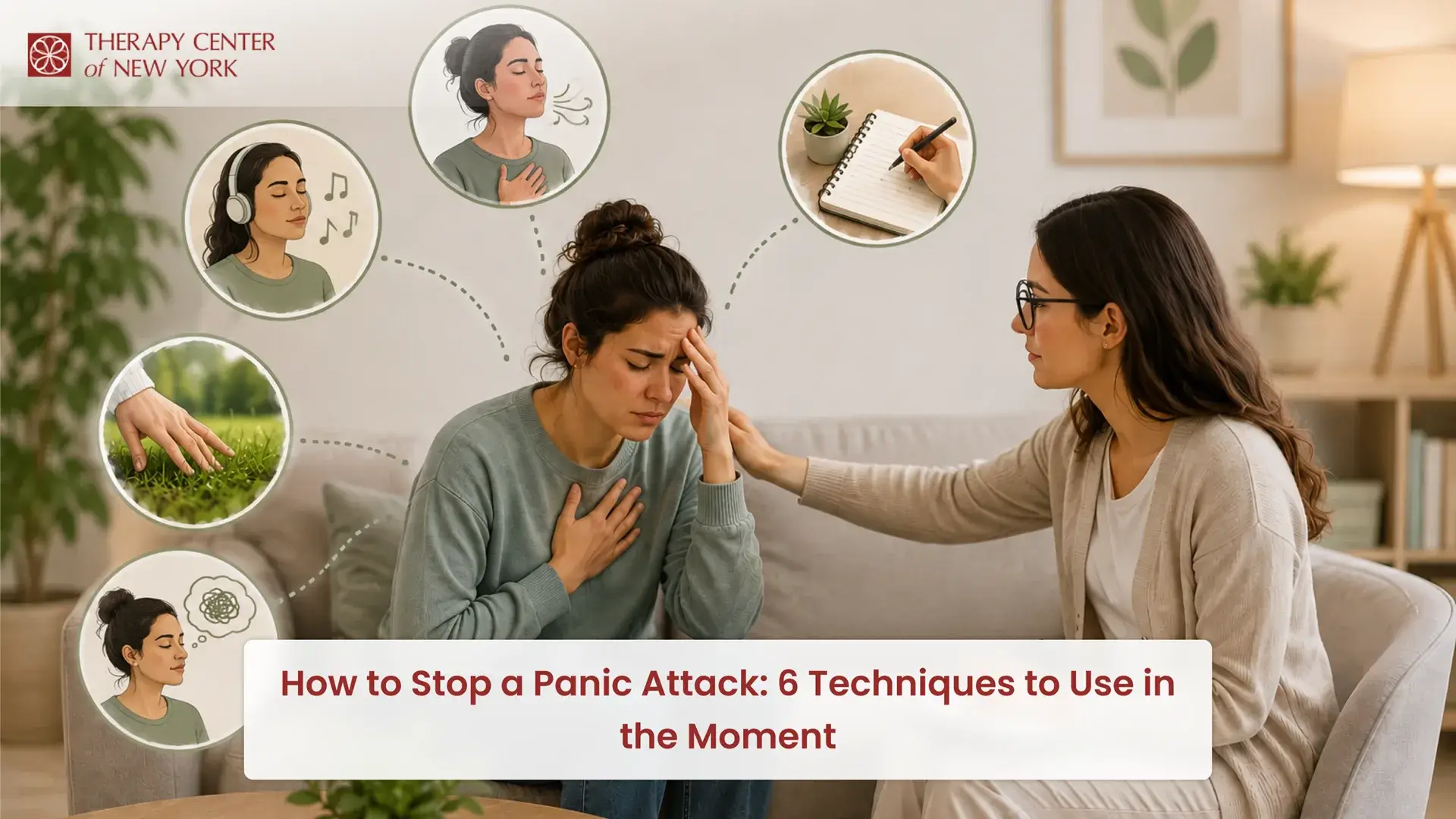
Experiencing a panic attack can be frightening and overwhelming. If you or a loved one live in New York and are wondering how to stop a panic attack, this guide is here to help.
Understanding what a panic attack is, recognizing the symptoms, and knowing practical techniques can make a significant difference in calming the moment. This article offers evidence-based, compassionate advice to empower adults dealing with panic attacks, anxiety-related symptoms, and panic disorder.
What Is a Panic Attack?
-
A panic attack is a sudden surge of intense fear or discomfort that reaches a peak within minutes. It often comes without warning and can happen when you're feeling calm or stressed.
-
While many people experience anxiety from time to time, a panic attack is more intense and can feel like a loss of control.
-
Panic attacks are a key feature of panic disorder, but they can also appear alongside other conditions.
-
The sensations are often so strong that people might feel like they are having a heart attack or another medical emergency.
What Does a Panic Attack Feel Like?
Knowing what a panic attack feels like can help you recognize the experience and seek the right help. Commonly, it feels like:
-
Sudden, overwhelming fear or terror
-
Heart pounding or racing
-
Difficulty breathing or shortness of breath
-
Feeling dizzy, lightheaded, or faint
-
Numbness or tingling in the hands or feet
-
Chest pain or discomfort
-
Chills or hot flashes
-
A sense of unreality or detachment (depersonalization or derealization)
These sensations can make you feel like something very bad is about to happen, which can make the attack worse.
Common Panic Attack Symptoms
Here are the typical panic attack symptoms to watch for:
-
Rapid heartbeat or palpitations
-
Sweating and trembling
-
Shortness of breath or feeling smothered
-
Choking sensation
-
Nausea or upset stomach
-
Dizziness or feeling faint
-
Feeling detached from oneself or surroundings
-
Fear of losing control or going crazy
-
Fear of dying
Recognizing these can help you understand when you’re experiencing a panic attack rather than another condition.
Panic Attack vs Anxiety Attack: What's the Difference?
Many people confuse a panic attack with an “anxiety attack.” While both involve intense feelings of fear and discomfort, there are differences:
-
Panic attacks come on quickly, peak within minutes, and often include intense physical symptoms.
-
Anxiety attacks tend to develop more gradually and are linked to a specific stressor or worry.
-
Anxiety attacks may be less intense physically but last longer.
Understanding the difference between a panic attack and an anxiety attack can help you better manage your symptoms and seek the most appropriate care.
What Causes Panic Attacks?
What causes panic attacks can vary between individuals. Some common triggers include:
-
Stressful life events or major changes
-
Underlying anxiety or panic disorder
-
Genetic or biological factors
-
Traumatic experiences
-
Certain medical conditions or medications
-
Substance use or withdrawal
At the Therapy Center of New York, care providers emphasize that identifying triggers can empower individuals to develop better coping strategies.
How Long Do Panic Attacks Last?
The duration of a panic attack varies, but most attacks last between 5 to 20 minutes. However, some symptoms may linger for hours afterward. If you're wondering how long do panic attacks last, knowing their typical timeframe can help you stay calm and remind yourself that the intense feelings are temporary.
6 Techniques to Stop a Panic Attack in the Moment
When faced with a panic attack, using effective, immediate techniques can help reduce symptoms and bring calm. Here are six proven methods you can try:
-
Use the 5-4-3-2-1 Grounding Technique
This popular grounding technique for panic helps refocus your mind by engaging your senses:
- Name 5 things you can see.
- Name 4 things you can touch.
- Name 3 things you can hear.
- Name 2 things you can smell.
- Name 1 thing you can taste.
This step-by-step sensory check connects you to the present moment, reducing fear and overwhelming sensations.
-
Practice Box Breathing
Box breathing for anxiety is a simple breathing exercise that helps regulate your breath and calm your nervous system:
- Inhale slowly for 4 seconds.
- Hold your breath for 4 seconds.
- Exhale gently for 4 seconds.
- Hold your breath for 4 seconds.
- Repeat until you feel more relaxed.
Controlling your breath can reduce the feeling of breathlessness and ease panic symptoms.
-
Focus on Physical Sensations
Try to observe your body without judgment. Pay attention to how your feet feel on the ground or notice the sensation of your clothing against your skin. This can divert your mind from fearful thoughts and ground you in reality.
-
Challenge Catastrophic Thoughts
When a panic attack hits, your mind might jump to worst-case scenarios. Gently question these thoughts. Remind yourself, “I am safe,” or “This feeling will pass.” Replacing negative predictions with rational ones can reduce panic intensity.
-
Use Progressive Muscle Relaxation
This involves tensing and then relaxing different muscle groups in your body, starting from your toes up to your head. It helps release physical tension caused by panic and promotes a sense of control.
-
Reach Out for Support
Contact a trusted friend, family member, or a behavioral health provider. Saying your feelings out loud can be grounding, and professional care providers at the Therapy Center of New York offer online therapy, making support accessible from home.
How to Handle Panic Attacks at Night
Panic attacks at night can disrupt sleep and increase anxiety about going to bed. To handle these:
- Maintain a calming bedtime routine to help signal your body it’s time to relax.
- Keep your bedroom comfortable and free of distractions.
- If a panic attack begins, try the 5-4-3-2-1 grounding technique or box breathing.
- Practice mindfulness or gentle stretches before lying down.
- Consider seeking behavioral health support if night panic attacks become frequent.
When Panic Attacks May Be a Sign of Panic Disorder
If panic attacks are recurrent and unexpected, and you worry about having more attacks, you may have panic disorder. Signs include:
- Frequent panic attacks without specific triggers
- Persistent fear of future attacks
- Changes in behavior to avoid places or situations tied to attacks
- Impact on daily functioning or quality of life
In such cases, early treatment from experienced behavioral health providers, like those at the Therapy Center of New York, can provide effective relief through therapy and coping strategies.
When to Seek Professional Help
Consider seeking help if:
- Panic attacks interfere with your daily life or relationships.
- Symptoms include chest pain, fainting, or confusion (after ruling out medical causes).
- You experience panic attacks frequently or unexpectedly.
- Your fear of panic limits your activities or causes avoidance.
Therapy, including online options available through the Therapy Center of New York, offers evidence-based approaches to manage panic attack symptoms and address underlying causes.
Final Thoughts
Panic attacks can feel terrifying, but understanding them and knowing how to stop a panic attack in the moment is empowering. Techniques like the 5-4-3-2-1 grounding method, box breathing, and progressive muscle relaxation are effective tools that you can use whenever panic strikes.
If you live in New York and are struggling with panic attacks or panic disorder, know that help is available. The dedicated care providers at the Therapy Center of New York specialize in behavioral health treatment tailored to your needs, including convenient online therapy sessions.
Remember, you are not alone, and with the right strategies and support, panic attacks can become manageable, allowing you to lead a fuller, calmer life.
Frequently Asked Questions
-
How can I stop a panic attack quickly?
Try grounding techniques like the 5-4-3-2-1 method, practice slow, deep breaths using box breathing, and focus on physical sensations to bring your mind back to the present moment.
-
What is the 5-4-3-2-1 grounding technique for panic attacks?
It’s a sensory exercise where you identify 5 things you see, 4 you can touch, 3 you hear, 2 you smell, and 1 you taste. This helps shift your attention away from fear and reconnects you with the present.
-
How long does a panic attack usually last?
Most panic attacks peak within 10 minutes and last between 5 to 20 minutes, though some feelings can linger afterward.
-
Can panic attacks happen while sleeping?
Yes, panic attacks at night can wake you from sleep, often causing intense fear and physical symptoms.
-
What triggers a panic attack?
Triggers vary but can include stress, certain situations, trauma, or even no identifiable cause. Understanding your triggers is important for managing panic.
-
Is a panic attack dangerous?
Panic attacks are not physically dangerous, though they can feel frightening. However, if you experience chest pain or other symptoms, it’s important to rule out medical causes.
-
What's the difference between a panic attack and an anxiety attack?
Panic attacks happen suddenly with intense physical symptoms, while anxiety attacks build gradually and are tied to specific worries or stressors.
-
Can breathing exercises help stop a panic attack?
Yes. Techniques like box breathing help slow the heart rate and calm your nervous system, making them effective in stopping panic attacks.
-
When should I seek treatment for panic attacks?
If panic attacks are frequent, disabling, or you're afraid of future attacks, seeking care from behavioral health professionals is advised.
-
Can therapy help prevent future panic attacks?
Absolutely. Therapy can teach coping skills, address underlying causes, and reduce the frequency and severity of panic attacks over time. For more information or to connect with behavioral health providers in New York, visit the Therapy Center of New York.