
What Is Couples Therapy and How Do You Know When You Need It?
- by The TCNY Care Team
Imagine being stuck in the same argument with your partner over and over again weeks, maybe even months passing, and nothing ever seems to
change. The frustration builds, and it feels like no one is really listening or understanding. If this sounds familiar, you’re not alone, and there is a way forward.
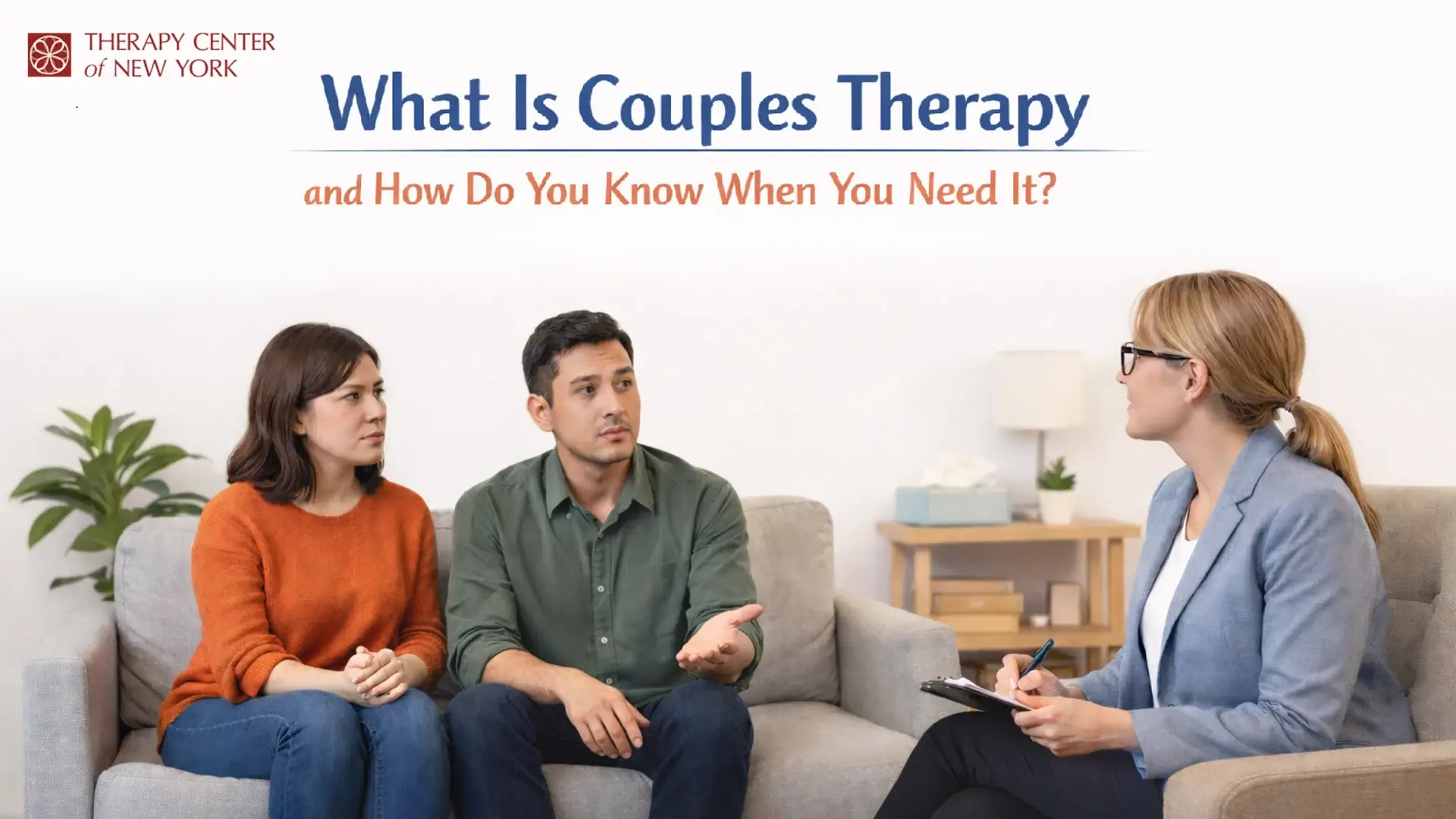
Couples therapy is a structured process where a licensed therapist helps partners improve communication, resolve conflicts, and deepen their connection.
In this article, we’ll explore what couples therapy is, how to recognize when you might need it, and practical tips for choosing the right couples therapist in New York. Whether you’re considering marriage counseling therapy for the first time, curious about virtual couples therapy options, or wondering about therapy tailored for ADHD-affected relationships, we’ve got you covered.
What Is Couples Therapy?
At its core, couples therapy is a focused and guided process where a licensed therapist works with two partners to improve how they communicate, address conflicts, and rebuild or strengthen their emotional bond. It’s much more than just venting or chatting about problems, it’s a professional, evidence-based approach to help couples work through difficulties together.
This differs from individual therapy, which focuses on one person’s issues, and from informal conversations that may not lead to real solutions. Couples therapy is specifically designed to address the dynamic between partners.
You might also hear the term marriage counseling therapy. While the two overlap significantly, marriage counseling typically focuses on married couples and often addresses long-term partnership challenges, while couples therapy can apply to any committed relationship.
There are several therapeutic styles used in couples work. Some of the most popular include:
-
Emotionally Focused Therapy (EFT): Focuses on identifying emotional patterns and creating secure bonds.
-
The Gottman Method: Based on research courses to improve friendship, manage conflict, and create shared meaning.
-
CBT-based couples therapy: Uses cognitive-behavioral tools to change harmful thinking and behavior patterns.
At the Therapy Center of New York, our licensed therapists have expertise in multiple approaches, ensuring your couple’s unique needs are met with care and clinical skill.
7 Signs You May Need Couples Therapy
-
Communication has broken down. This might look like constant silence, yelling, or stonewalling, where one or both of you shut down during conversations.
-
The same arguments keep repeating without resolution. If you find yourselves stuck on the same points over and over, it’s often a sign that outside help is needed.
-
Emotional or physical intimacy has significantly declined. Feeling distant, disconnected, or avoiding closeness can indicate underlying unresolved issues.
-
Trust has been broken. Whether due to infidelity, dishonesty, or other betrayal, trust ruptures are painful and complex to repair without guidance.
-
One or both partners feel unseen, unheard, or dismissed. Feeling invalidated in your relationship can undermine connection and cause deep frustration.
-
Life transitions causing tension. Big changes like welcoming a new baby, relocating, or career shifts can add stress and strain that couples therapy can help address.
-
One partner has ADHD or a behavioral health condition affecting the relationship. Managing ADHD symptoms can be challenging and sometimes misunderstood; couples therapy ADHD-focused sessions offer strategies tailored to these unique needs.
Key Insight:
Seeking couples therapy does not mean your relationship is in crisis. Many couples use therapy proactively, to strengthen communication, navigate a life transition, or simply grow closer. The earlier you go, the easier the work.
Does Couples Therapy Actually Work?
A common question many people ask is: does couples therapy work?
The answer is yes, especially when both partners are committed to the process and willing to actively participate.
Research from trusted organizations like the American Psychological Association (APA) and the Gottman Institute shows that over 70% of couples experience significant improvement in their relationship after therapy.
Key Factors That Make Couples Therapy Successful
For the best results, couples therapy depends on a few important factors:
-
Right Therapist Fit
Choosing a licensed couples therapist who understands your relationship dynamics is crucial. -
Consistency in Sessions
Attending sessions regularly helps maintain progress and build momentum. -
Willingness to Change
Both partners must be open, honest, and ready to work on themselves and the relationship.
The 5-5-5 Couples Therapy Technique
One effective method used in couples therapy is the 5-5-5 communication technique, designed to improve understanding and reduce conflict.
How It Works:
-
Partner A speaks for 5 minutes without interruption
-
Partner B listens actively for 5 minutes
-
Take a 5-second pause before responding
-
Repeat this cycle 5 times
Benefits of the 5-5-5 Technique:
-
Encourages active listening
-
Reduces interruptions and defensiveness
-
Creates space for clear communication
-
Builds empathy and emotional connection
Online vs In-Person Couples Therapy: What Works Better?
|
Factor |
Online Couples Therapy (Virtual) |
In-Person Couples Therapy |
|
Accessibility |
Easy to access from anywhere |
Requires travel to a physical location |
|
Convenience |
Ideal for busy schedules; no commute needed |
Fixed appointment location and travel time required |
|
Comfort Level |
Attend sessions from home; more relaxed environment |
Neutral, structured clinical setting |
|
Flexibility |
More flexible scheduling options |
Limited to clinic hours |
|
Effectiveness |
Equally effective for most couples when done consistently |
Highly effective, especially for complex or intense situations |
|
Best For |
Busy professionals, long-distance couples, or those preferring privacy |
Couples dealing with severe conflict or needing deeper in-person interaction |
|
Non-Verbal Communication |
Limited ability to observe full body language |
Better observation of non-verbal cues and interaction patterns |
|
Therapy Experience |
Comfortable and familiar setting may help some couples open up more |
Face-to-face interaction can feel more personal and engaging |
|
TCNY Services |
Offers high-quality telehealth sessions with licensed therapists |
Provides in-person sessions with the same clinical standards |
How to Choose the Right Couples Therapist
Finding the right therapist can make all the difference. When you choose a couples therapist, look for licensed professionals such as LCSWs (Licensed Clinical Social Workers), LMFTs (Licensed Marriage and Family Therapists), or licensed psychologists who specialize in couple and relationship issues.
During your first session, it’s important to ask questions like:
-
What therapeutic approach do you use with couples?
-
How do you handle conflicts or crises during sessions?
-
Do you have experience working with ADHD or other behavioral health conditions?
-
How do you ensure cultural sensitivity?
Reviews from other couples can also offer helpful insight. Look for feedback about the therapist’s ability to create a safe, respectful environment and their skill in facilitating communication.
The Therapy Center of New York’s team includes many experienced couples therapists in New York, ready to guide you through this journey with empathy and expertise.
Take the First Step Toward a Healthier Relationship Today
Seeking couples therapy is a sign of strength, not failure. It shows your commitment to growth and connection. If your relationship feels stuck or strained, professional guidance can open doors to understanding and healing.
With licensed care providers at the Therapy Center of New York, you have access to compassionate, evidence-based couples therapy tailored to your unique needs, whether you prefer in-person sessions or the convenience of online therapy.
Ready to reconnect? Book a free consultation with a Therapy Center of New York couples therapist today and take the first step toward a healthier relationship.
FAQs
-
How long does couples therapy usually last?
Couples therapy can vary depending on your goals and needs. Some couples find improvement in a few months, while others benefit from longer-term work. Typically, sessions last around 45 minutes and are held weekly or biweekly.
-
Can couples therapy help if only one partner wants to go?
Yes. Therapy can still be helpful if one partner participates. Sometimes, combining individual sessions with couples therapy can improve communication and help change patterns.
-
What is the 5-5-5 couples therapy technique?
This technique structures conversations so each partner speaks and listens actively for 5 minutes, pauses for 5 seconds before responding, and repeats this process five times. It encourages empathy and prevents interruptions.
-
Is online couples therapy as effective as in-person?
Research shows that virtual couples therapy can be as effective as in-person sessions, especially when both partners are engaged and the therapist is experienced with telehealth methods.
-
Does insurance cover couples therapy in New York?
Couples therapy is typically self-pay based. Some plans may cover it when one family member is receiving individual behavioral health care or when it is deemed medically necessary, often with session limits. It’s best to check with the Therapy Center of New York’s intake team for further details.