
Mental Health Guide: Signs of Depression, Clinical Depression, Anxiety, Bipolar Disorder, and Schizophrenia Explained
- by The TCNY Care Team
Introduction
Mental health is just as important as physical health, yet many people still struggle to understand common mental health
conditions and their symptoms. Issues such as depression, anxiety, bipolar disorder, and schizophrenia affect millions of people worldwide and can impact daily life, relationships, and work performance.
In this complete mental health guide, you will learn about the signs of depression, clinical depression, anxiety symptoms, and serious conditions such as bipolar disorder and schizophrenia. The goal of this article is to provide clear, reliable, and easy-to-understand information that helps readers recognize symptoms early and take the right steps toward support and treatment.
What Is Mental Health and Why It Matters
Mental health refers to emotional, psychological, and behavioral well-being. It affects how people think, feel, and react in different situations.
Good mental health helps people:
-
Handle stress effectively
-
Maintain healthy relationships
-
Make better decisions
-
Stay productive at work or school
-
Improve overall quality of life
When mental health is affected, even simple daily tasks can become difficult. That is why understanding symptoms early is extremely important.
Signs of Depression Everyone Should Know
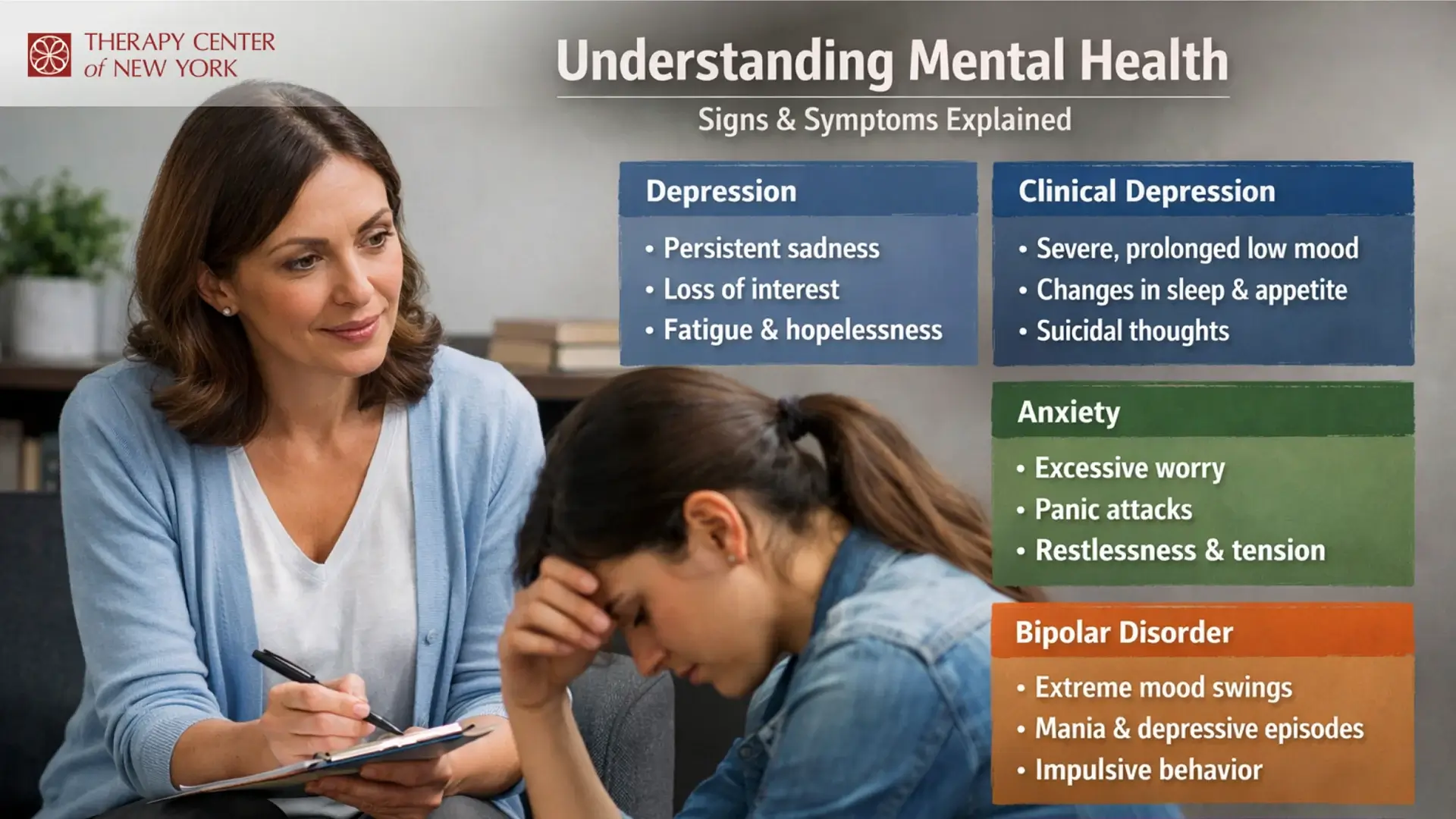
Depression is one of the most common mental health conditions today. However, many people ignore the early warning signs because they think it is just temporary sadness.
Here are some of the most common signs of depression:
-
Constant sadness or low mood
-
Loss of interest in activities once enjoyed
-
Lack of energy or constant tiredness
-
Difficulty concentrating
-
Changes in sleep patterns
-
Changes in appetite
-
Feeling hopeless or worthless
If these symptoms continue for more than two weeks, it may be a sign of clinical depression and should not be ignored.
What Is Clinical Depression?
Clinical depression is a more serious form of depression that affects daily functioning. It is not simply feeling sad for a few days. Instead, it is a medical condition that requires proper treatment and support.
People with clinical depression may experience:
-
Long-term emotional numbness
-
Extreme fatigue
-
Loss of motivation
-
Withdrawal from social life
-
Difficulty completing daily tasks
Many individuals hesitate to seek help, but early treatment can make a huge difference.
Understanding Anxiety and Its Symptoms
Anxiety is another major mental health concern affecting both teenagers and adults. While normal stress is part of life, constant anxiety can negatively affect emotional and physical health.
Common anxiety symptoms include:
-
Overthinking or excessive worry
-
Restlessness
-
Increased heart rate
-
Difficulty sleeping
-
Fear without a clear reason
-
Trouble focusing
When anxiety becomes intense and frequent, it may require professional help and structured treatment.
Bipolar Disorder: More Than Mood Swings
Bipolar disorder is often misunderstood. Many people think it is just mood swings, but in reality, it is a serious mental health condition that involves extreme emotional highs and lows.
There are two main phases of bipolar disorder:
-
Manic Phase
During this phase, a person may feel:
- Extremely energetic
- Overconfident
- Highly active
- Unable to sleep
-
Depressive Phase
During this phase, symptoms are similar to clinical depression:
- Low energy
- Sadness
- Loss of motivation
- Emotional instability
Understanding these patterns is important because early diagnosis can help manage the condition effectively.
Schizophrenia Explained in Simple Terms
Schizophrenia is one of the most complex mental health conditions. It affects how a person thinks, behaves, and understands reality.
Common symptoms of schizophrenia include:
-
Hallucinations (seeing or hearing things that are not real)
-
Confused thinking
-
Difficulty expressing emotions
-
Lack of motivation
-
Social withdrawal
Although it is a serious condition, modern treatment methods have helped many individuals live stable and productive lives.
Borderline Personality Disorder and Emotional Instability
Borderline personality disorder (BPD) is another important condition that affects emotional regulation and relationships.
People with borderline personality disorder may experience:
-
Intense emotional reactions
-
Fear of abandonment
-
Sudden mood changes
-
Difficulty maintaining relationships
-
Impulsive behavior
With proper therapy and emotional support, many people successfully manage the symptoms of BPD.
When Should You Seek Help?
Recognizing symptoms early is the most important step. Many people wait too long before seeking help because they think the problem will go away on its own.
You should consider professional help if:
-
Symptoms last more than two weeks
-
Daily life becomes difficult
-
Work or relationships are affected
-
You feel emotionally overwhelmed
-
Anxiety or depression keeps getting worse
Seeking help early can improve recovery and long-term emotional stability.
How to Improve Mental Health in Daily Life
While professional treatment is important, small lifestyle changes can also support better mental health.
Here are some practical tips:
-
Maintain a regular sleep routine
-
Stay physically active
-
Limit screen time
-
Practice mindfulness or meditation
-
Talk openly with trusted people
-
Avoid ignoring emotional stress
These small changes can significantly improve emotional well-being over time.
Conclusion
Mental health plays a critical role in overall well-being, and understanding conditions such as depression, anxiety, bipolar disorder, schizophrenia, and borderline personality disorder can help people recognize symptoms early. The signs of depression and clinical depression are often ignored, but early awareness can lead to better treatment and long-term recovery.
If you or someone you know is experiencing mental health challenges, do not ignore the signs. The right support, therapy, and guidance can make a life-changing difference. Taking the first step toward better mental health today can lead to a healthier and more balanced future.
FAQs
-
What are the most common signs of depression?
Common signs of depression include sadness, low energy, loss of interest in activities, sleep problems, and difficulty concentrating.
-
What is the difference between depression and clinical depression?
Clinical depression is more serious and long-lasting. It affects daily life and usually requires professional treatment.
-
Can anxiety and depression happen together?
Yes, many people experience both anxiety and depression at the same time. These conditions are often connected.
-
Is bipolar disorder a serious mental health condition?
Yes, bipolar disorder is a serious condition, but it can be managed effectively with proper treatment and support.
-
What are the early symptoms of schizophrenia?
Early symptoms may include confusion, emotional withdrawal, hallucinations, and difficulty focusing.
-
When should someone see a therapist for mental health issues?
If symptoms last longer than two weeks or begin to affect daily life, it is important to seek professional help.
-
Can mental health conditions be treated?
Yes, many mental health conditions can be managed with therapy, medication, and lifestyle changes.